Skip to content
HOLZ

Materials

Every material fails.The question is how.

A material earns its place by how it behaves once it is in a working room: what it survives, what ends it, and where it shows its age first. None of this is secret knowledge. It is what the specification is built on, written down.

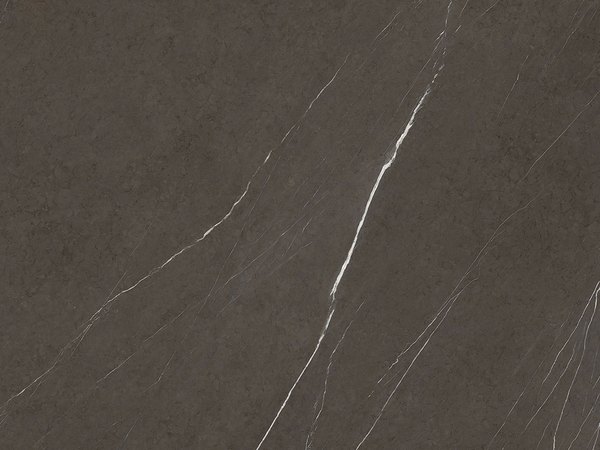
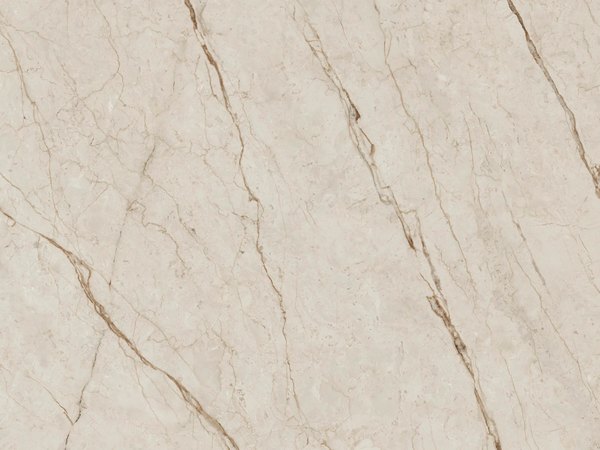
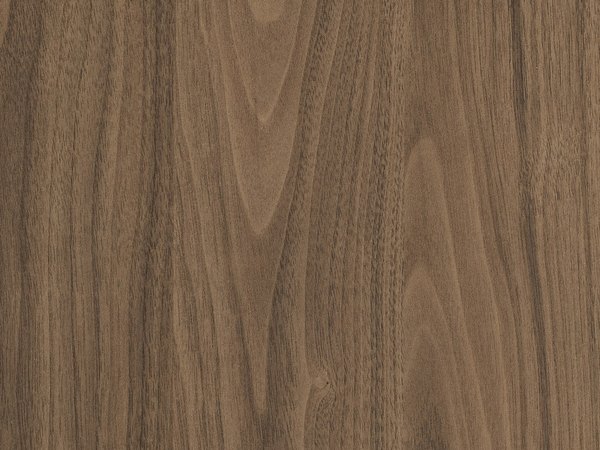
Concept study: the dark veined stone island in front of the walnut run, backlit onyx above, in evening light.
Concept study, drawn to HOLZ specification.

The four worktop families

Almost every worktop in a made-to-measure kitchen belongs to one of four families. They do not sit on a scale running from worse to better. They fail in different ways, and the choice is which failure suits the way you actually cook.

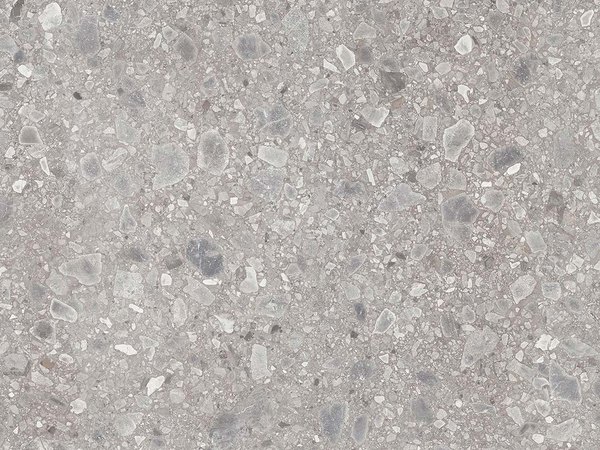
Sintered surface

Mineral powders fused under heat and pressure into a slab with almost no porosity.

How it fails

It will not stain and it will not scorch. It chips. The damage comes from point impact at an edge or a corner (a dropped pan, a knock while unloading) rather than from wear. Where the colour runs through the body, a chip stays close to invisible; where the pattern sits on the face, a chip shows the paler body beneath it.

What that means

The arris and the cut-out corners are the whole specification here. Whether the colour is through-body or surface-applied decides how a chip will read in five years.

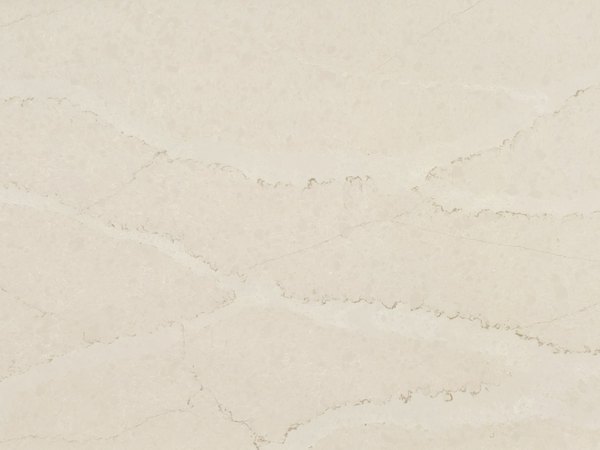
Engineered quartz

Crushed stone bound in resin: largely mineral, but the binder is a polymer.

How it fails

The stone is not the weak part; the binder is. A hot pan set down directly leaves a mark that cleaning will not lift, because the resin has scorched rather than the surface having stained. Sustained direct sunlight discolours the same binder over a longer timescale. It shrugs off almost everything a kitchen does to it, except heat and light.

What that means

It suits a household that reaches for a trivet without thinking, and a room that does not sit in full sun. A single lapse is permanent.

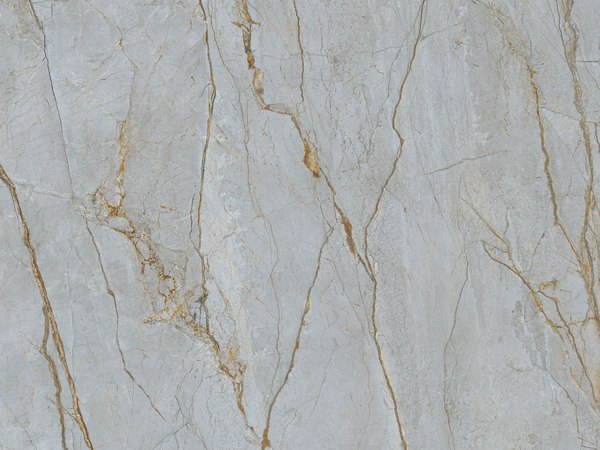
Natural stone

Quarried, cut and finished. No two slabs alike, and the slab you approve is the slab you receive.

How it fails

It fails by chemistry rather than by wear. Acid (lemon, wine, vinegar) etches the calcite in marble, leaving a dulled patch that is a chemical burn and not a stain, which no cleaning recovers. The denser granites resist the acid but remain porous enough to darken around the sink unless they are sealed, and sealed again.

What that means

Marble records its use, and some clients choose it for precisely that. The question is whether you want a surface that keeps a diary.

Solid surface

Mineral filler held in an acrylic matrix: a manufactured material rather than a stone.

How it fails

It scratches, and it will soften and mark under a hot pan. It is also the only one of the four that repairs: the material is identical all the way through, so damage sands back and disappears. Its joints fuse into one continuous surface, so a long run or a coved upstand offers no seam for water to find.

What that means

The wrong surface for a household that cuts directly on the worktop. The right one where seamlessness at the wall, and the ability to renew the surface, matter more than hardness.

None of the four is the best surface. The specification names one of them because of how you cook, what your room does with light, and which failure you would rather never see.

The edge is the tell

Ask one question of a kitchen and make it about an edge. Every shortcut in a cabinet becomes visible along an edge eventually, and edges are where the saving is easiest to take and hardest to see on the day.

Concept detail: a lit open shelving niche set into dark veined stone, walnut backs and shelves.
Concept study

The door edge

A door is a board with something wrapped around its cut edges. Applied with adhesive, the wrap leaves a seam; steam finds that seam before it finds anything else, and the top edge lifts first. Fused without adhesive, there is no seam to find. The two are indistinguishable in a showroom and separate within a couple of years.

The worktop arris

A dead-square top edge looks exact and chips against the first pan that meets it. A small arris, a fraction of a millimetre eased off, still reads square to the eye and survives the room. Where a thin slab is mitred up to an apparent thickness, the corner is the tell: a good mitre leaves a hairline you have to hunt for, a poor one leaves a shadow.

The cut inside the sink base

The holes cut for the waste and the supplies are the least visible edges in the kitchen, which is exactly why they are the ones left raw. A raw cut in a board is where a slow leak stops being a plumbing problem and becomes a swollen carcase.

The reveal

The gap between two fronts is an edge as well. Held to one dimension down a run, it reads as intent. Drifting a millimetre from one end to the other, it reads as whatever could be managed on the day, and the eye catches it long before the mind explains why.

Movement: what to look for

Hinges, runners and lift mechanisms are the parts of a kitchen you touch most often and examine least. They are also the parts judged in showrooms under the least representative conditions there are.

Empty tells you nothing

Every runner is smooth with nothing in it. The differences appear under load at around three-quarters open, where the weight sits furthest from the fixing. That is where a weak runner drops a fraction and begins to grind.

The box, not the front

A steel-sided box with its base bonded in stays quiet. A base dropped into a groove drums when the drawer is loaded and pushed: a small sound, repeated several times a day for as long as you own the kitchen.

Soft-close is not one behaviour

A good closer decelerates the last stretch whether the drawer is full or empty. A cheap one is tuned to a single weight: it slams when loaded and bounces back when it is not.

Square, or racking

Pushed shut from one corner rather than the middle, a well-made box still closes square. A weak one twists, catches on the carcase, and slowly wears its own opening out of true.

A hinge has to stay adjustable

Rooms settle and doors move with them. A hinge adjustable in three planes can be brought back into line years later. One that is not leaves a dropped door dropped.

Does the back arrive at the front

A corner is only storage if you can reach into it. Either the mechanism brings the whole of the corner into the room in one movement, or you have a cupboard that gets filled once and then forgotten.

A rating is a declaration

Load and cycle figures are declarations made by whoever manufactures the part. The number alone proves little. What is worth insisting on is that the declared figure appears in your specification, where it becomes something that can be held to.

How a kitchen ages

A kitchen does not wear evenly. It ages in three places first, and it is the same three places in every kitchen ever built.

The door above the dishwasher

Each cycle vents warm vapour upward into it. That door meets more moisture than any other surface in the room, and it is where an adhesive edge lifts, a faced panel bubbles, and an unsealed board begins to swell.

The front you close with a hip

The drawer beneath the worktop by the sink is shut with a hip, a knee and wet hands. It is where a finish shows abrasion first, and where a handleless grip rail wears through.

The worktop in front of the sink

Water stands there, cutlery is dropped there, and it takes the acid off whatever is being rinsed. Whatever the material, this stretch ages ahead of the rest of the run.

Steam, not heat

Heat damage is dramatic and rare. Moisture is undramatic and constant, and it is what actually ends most cabinetry: an unsealed cut, an adhesive seam, or a junction that was never detailed to be wet.

Matt, gloss and the wiping question

A gloss face shows every circular wipe under a low light. A matt face conceals marks but varies enormously in how readily it releases them. Fingerprint-resistant describes a coating, and coatings are not equivalent. The question worth asking is not whether a finish is matt, but how it cleans.

What this climate does

Air conditioning cycles a room between humid and dry and back again, continuously. A board with an exposed cut edge takes on moisture and gives it up with each swing, and swells at that edge while doing it. Edge sealing carries more weight here than it would in a temperate house.

In any showroom

None of what follows requires a specialist, and none of it belongs to the studio. It applies in any showroom you happen to be standing in.

  • The door above the dishwasher. Run a fingernail along its top corner and feel for a seam.
  • A loaded drawer at three-quarters open. Press down gently and watch whether it holds its line.
  • That same drawer, pushed shut from one corner. It should close square without catching.
  • The cupboard under the sink. Look at the cut edges around the waste: sealed, or raw.
  • The top edge of the worktop, under a fingernail. Dead square, or eased.
  • The gap between two fronts, at both ends of a run. It should be the same gap.

Whatever you find, ask for it in writing. A studio that specifies these things can put them on a document.

What the studio keeps

Behind all of this sits a documented record of everything the studio builds with: every mechanism, surface, board and light, held by source, series and how it behaves over years of use. It is a planning instrument rather than a public catalogue. The names, the series and the documentation are opened with you in your specification and across the table, and they stay off the webpage.

Read a complete specification

Ask about any material by name.

The record is opened in conversation, and the studio answers in specifics, names included.

Ask the studio